The 5 Convenient Kale Formats are fresh kale, frozen kale, kale juice, kale powder, and kale capsules. Each form offers a different balance of preparation time, storage, fiber, serving size, taste, and label transparency. This guide compares those practical differences so you can choose a format that fits how you actually eat.
Fresh and frozen kale remain recognizable vegetables. Juice removes much of the original plant structure when the pulp is discarded. Whole-leaf powder removes water and concentrates the dry material. Capsules place a small amount of powder or extract into a portable format.
Secrets Of The Tribe uses a simple editorial filter for this comparison: what the format delivers, what it leaves out, and whether it fits a repeatable routine. No single form wins every category.
- What is the quick comparison?
- How do the 5 Convenient Kale Formats compare?
- 1. When is fresh kale the most useful format?
- Best uses
- Preparation requirements
- Storage tradeoff
- 2. Is frozen kale a practical alternative to fresh?
- Texture and cooking
- Nutrient retention
- Waste and cost
- 3. What should you know about kale juice?
- Fiber difference
- Ingredient transparency
- Juice safety
- 4. How is kale powder different from whole kale?
- Whole-leaf powder
- Kale extract
- Processing and storage
- Practical uses
- 5. When do kale capsules make sense?
- Serving size
- Powder, extract, or blend
- Quality information
- Regulatory context
- Which kale format provides the most fiber?
- What safety considerations apply to every format?
- 5 Convenient Kale Formats Checklist
- Define the purpose
- Compare the serving
- Check the fiber
- Read all ingredients
- Review storage needs
- Estimate waste
- Check medication consistency
- Choose one starting format
- 5 Convenient Kale Formats | FAQ
- Which kale format is most similar to a whole vegetable?
- Is frozen kale less useful than fresh kale?
- Does kale juice contain fiber?
- Is kale powder the same as kale extract?
- Do kale capsules count as a vegetable serving?
- Which kale format has the longest shelf life?
- Can you use more than one kale format?
- What should you check on a kale supplement label?
- Glossary
- Conclusion
- Sources Used
What is the quick comparison?
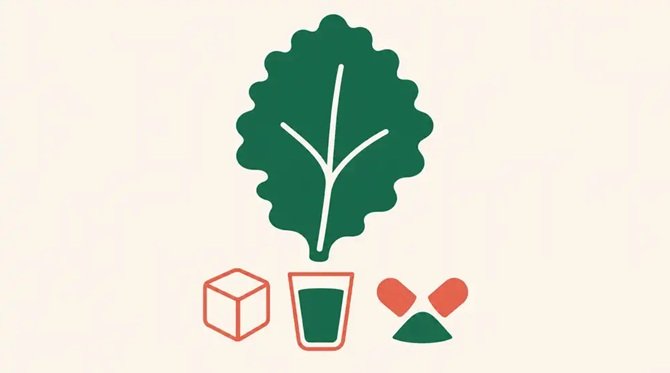
Fresh kale offers the clearest whole-food experience. Frozen kale provides similar cooking uses with longer storage. Juice is easy to drink but usually contains less fiber than whole leaves. Powder is compact and flexible. Capsules require almost no preparation but provide little food volume.
- Fresh: Best for salads, cooking, texture, and visible portions.
- Frozen: Best for low-effort cooked meals and reducing food waste.
- Juice: Best for people who prefer a drink and can check ingredients carefully.
- Powder: Best for shelf-stable use in food, drinks, and travel.
- Capsules: Best for portability and avoiding the taste of kale.
The right choice depends on your purpose. A capsule cannot add vegetable volume to dinner. Fresh leaves are less useful during travel. Juice may be quick, but it does not reproduce the structure of the original vegetable.
How do the 5 Convenient Kale Formats compare?
The table below focuses on practical features rather than package claims. Exact nutrient content varies by serving size, kale variety, processing, storage, and added ingredients.
| Format | Fiber and food structure | Preparation | Storage | Main limitation |
|---|---|---|---|---|
| Fresh kale | Whole leaves with natural fiber and water | Washing, trimming, and chopping | Short refrigerated life | Can wilt or spoil before use |
| Frozen kale | Leaf material and fiber remain | Usually ready for cooking | Long freezer storage | Soft texture after thawing |
| Kale juice | Less fiber when pulp is removed | Ready to drink or requires a juicer | Short life after opening | Ingredients and sugar content may vary |
| Kale powder | Depends on whole-leaf or extract form | Mix into food or liquid | Long shelf life when stored correctly | Serving size may be much smaller than expected |
| Kale capsules | Usually minimal fiber and no food volume | No kitchen preparation | Portable and shelf-stable | Contents vary between products |
1. When is fresh kale the most useful format?
Fresh kale is most useful when you want a whole vegetable that can become part of a meal. You can see the portion, control the preparation, and use the leaves in salads, soups, pasta, eggs, grain bowls, wraps, and cooked sides.
Best uses
Baby kale works well in raw salads and sandwiches. Curly kale suits massaged salads and baked chips. Lacinato kale is easy to slice for soups, beans, pasta, and sauteed dishes.
Preparation requirements
Wash fresh kale under plain running water. Remove damaged areas and thick stems. Dry the leaves before making salads or chips. Do not wash produce with soap or household cleaning products.
Storage tradeoff
Fresh kale requires refrigeration and can lose quality within days. Store it dry in a clean bag or container. A paper towel can absorb excess moisture. Buy an amount you can realistically use.
Fresh kale makes sense when you cook regularly and value texture, meal volume, and flexibility. It is less convenient when refrigeration or preparation time is limited.
2. Is frozen kale a practical alternative to fresh?
Yes. Frozen kale is practical for soups, eggs, sauces, casseroles, beans, and other cooked dishes. It is usually washed, chopped, blanched, and ready to heat. You can take only the amount you need and return the rest to the freezer.
Texture and cooking
Freezing changes the leaf structure, so thawed kale becomes softer than fresh kale. This matters in salads but is less noticeable in dishes that require cooking. Add frozen kale directly to soup or a hot pan unless the package says otherwise.
Nutrient retention
Freezing itself does not automatically remove all nutrients. Retention depends on the original produce, blanching, storage temperature, storage time, and cooking method. Fresh kale that sits in a refrigerator and frozen kale stored correctly also follow different timelines, so the word “fresh” does not guarantee a fixed nutrient advantage.
Waste and cost
Frozen kale can reduce waste because it does not need to be used within a few days. Compare prices per usable portion, not only per package. Fresh bunches may include stems or damaged leaves that you discard.
The editorial view at Secrets Of The Tribe is that frozen kale deserves equal consideration whenever fresh leaves regularly spoil unused. Practical consistency matters more than the appearance of the package.
3. What should you know about kale juice?
Kale juice offers a drinkable format with little chewing or meal preparation. However, the final product may include apple, pineapple, cucumber, celery, lemon, or other ingredients. A bottle described as green juice may contain only a modest amount of kale.
Fiber difference
Traditional juicing separates liquid from much of the pulp. This usually leaves less dietary fiber than eating whole kale or drinking a blended beverage that retains the entire leaf. The amount depends on the equipment and whether any pulp remains.
Ingredient transparency
Read the ingredient list in order. Ingredients generally appear by weight. Check the Nutrition Facts panel for serving size, total sugars, added sugars, sodium, and calories. Do not assume that green color reveals the proportion of kale.
Juice safety
Fresh produce can carry microorganisms into juice. Pasteurized or otherwise safety-processed juice is the more cautious choice for children, pregnant people, older adults, and people with weakened immune function. Keep refrigerated products cold and follow the use-by instructions.
Kale juice may count toward vegetable intake in some dietary systems, but it lacks the chewing, visible portion, and full fiber structure of whole leaves. Treat it as one format, not a complete replacement for varied vegetables.
4. How is kale powder different from whole kale?
Kale powder is made by drying and milling kale or by producing an extract. Removing water creates a lighter, shelf-stable product. It does not guarantee that every nutrient or plant compound remains in the same proportion.
Whole-leaf powder
Whole-leaf powder contains dried leaf material and may retain some fiber. The actual amount per serving depends on how many grams the product provides. A small scoop may represent much less plant material than a plate of cooked kale.
Kale extract
An extract concentrates selected components through processing. It is not nutritionally identical to whole-leaf powder. Look for a declared extraction ratio or standardized component, but remember that a larger ratio does not describe every part of the original leaf.
Processing and storage
Drying method, heat, oxygen, light, and storage temperature can affect nutrient retention. Research on dried kale has found differences between air drying, freeze-drying, blanching, and storage conditions. Keep powder tightly closed and follow the label’s storage directions.
Practical uses
Mix kale powder into soup, tomato sauce, hummus, pesto, eggs, yogurt dip, or a savory drink. Start with a small amount if you are unfamiliar with the flavor. Stay within the labeled directions.
5. When do kale capsules make sense?
Kale capsules make sense mainly when portability and taste avoidance matter. They require no washing, refrigeration, cooking, or mixing. This convenience comes with less food volume and usually a smaller quantity of kale material.
Serving size
Check how many capsules form one serving and how much kale that serving contains in milligrams or grams. A bottle may show the amount for several capsules rather than one.
Powder, extract, or blend
Confirm whether the capsule contains whole-leaf powder, an extract, or a proprietary blend. A blend may combine kale with grasses, vegetables, herbs, vitamins, minerals, and processing aids. Individual quantities may not always be clear.
Quality information
Look for batch identification, expiration details, storage directions, manufacturer contact information, and credible independent testing. Testing can help verify identity and screen for contaminants, but it does not guarantee a specific personal result.
Regulatory context
In the United States, the FDA does not approve dietary supplements for safety and effectiveness before most products enter the market. Rules differ across countries. A supplement label should not be treated as evidence that a capsule equals a serving of vegetables.
Which kale format provides the most fiber?
Fresh and frozen whole kale generally provide the clearest sources of natural fiber because the leaf structure remains in the food. Whole-leaf powder can contain fiber, but its serving may be small. Juice contains less when pulp is removed, while capsules usually provide very little per serving.
| Format | Relative fiber potential | Food volume | Key check |
|---|---|---|---|
| Fresh | Higher | High | Edible portion |
| Frozen | Higher | Moderate after cooking | Plain or seasoned product |
| Juice | Lower when pulp is removed | Low | Fiber on Nutrition Facts |
| Powder | Variable | Very low | Whole leaf and grams per serving |
| Capsules | Usually minimal | Minimal | Total serving weight |
What safety considerations apply to every format?
Kale is rich in vitamin K. The NIH Office of Dietary Supplements lists about 113 micrograms of vitamin K in one cup of raw kale. Actual values vary by variety, weight, preparation, and database entry.
People who take warfarin or another vitamin K antagonist may need to keep vitamin K intake reasonably consistent. A sudden change from food, juice, powder, or capsules can affect medication management. Discuss substantial changes with a qualified healthcare professional.
Seek individualized guidance if you have a condition that requires controlled nutrient intake, are pregnant, are preparing for surgery, or already use several dietary supplements. This comparison provides general information and does not assess personal needs.
5 Convenient Kale Formats Checklist
Use this checklist to choose a format based on measurable details. Consider your kitchen habits, storage space, taste preferences, and current diet before buying.
Define the purpose
Decide whether you want a whole vegetable, a cooking shortcut, a drink, or a portable supplement. Each goal points to a different format.
Compare the serving
Check the edible portion, liquid volume, scoop weight, or capsule count. Avoid comparing formats only by package size.
Check the fiber
Use the nutrition label to see how much fiber one serving provides. Do not assume that every green product contains whole-leaf fiber.
Read all ingredients
Look for added sugar, sodium, flavors, sweeteners, fillers, and additional botanicals. Choose a product whose contents you can understand.
Review storage needs
Confirm whether the product needs refrigeration, freezing, or protection from heat and moisture. Choose a format you can store correctly.
Estimate waste
Consider how much fresh kale you discard and how quickly you use opened juice or powder. The cheapest package is not always the lowest-cost serving.
Check medication consistency
Count vitamin K from foods and supplements if consistency matters for your medication. Ask a healthcare professional before making a large change.
Choose one starting format
Test one form before buying several versions. A simple trial shows whether the taste, preparation, and serving size fit your routine.
5 Convenient Kale Formats | FAQ
Which kale format is most similar to a whole vegetable?
Fresh and frozen kale are most similar because they retain the leaf material, fiber, and visible food portion.
Is frozen kale less useful than fresh kale?
No. Frozen kale works well in cooked meals and often requires less preparation. Texture is the main practical difference.
Does kale juice contain fiber?
It may contain some fiber, but traditional juicing removes much of the pulp. Check the Nutrition Facts panel for the amount per serving.
Is kale powder the same as kale extract?
No. Whole-leaf powder contains dried leaf material, while an extract concentrates selected components through additional processing.
Do kale capsules count as a vegetable serving?
Usually not. Capsules generally provide little food volume and may contain much less plant material than a typical vegetable portion.
Which kale format has the longest shelf life?
Capsules and sealed powder usually last longest when stored as directed. Frozen kale also lasts much longer than refrigerated fresh leaves.
Can you use more than one kale format?
Yes. You might use fresh kale for salads, frozen kale for cooking, and powder during travel. Consider total intake and label directions.
What should you check on a kale supplement label?
Check the form, amount per serving, capsule count, full ingredient list, storage directions, expiration details, and quality testing information.
Glossary
Blanching
Brief heating used before freezing or drying to slow quality changes.
Dietary fiber
Plant carbohydrate that is not fully digested in the small intestine.
Extract
A processed ingredient that concentrates selected components from a raw material.
Freeze-drying
A drying method that removes frozen water under low pressure.
Pasteurization
A controlled process used to reduce harmful microorganisms in products such as juice.
Proprietary blend
A mixture that may list a total amount without showing every ingredient’s individual quantity.
Supplement Facts
A label panel that lists serving information and declared dietary ingredients.
Whole-leaf powder
Dried kale leaf that has been milled without intentionally isolating one component.
Conclusion
Fresh and frozen kale offer the clearest whole-food value, while juice, powder, and capsules trade food structure for convenience. Choose the format whose serving, ingredients, storage, and use fit your routine.
Sources Used
- Kale nutrition and serving information, USDA SNAP-Ed Seasonal Produce Guide – snaped.fns.usda.gov/resources/nutrition-education-materials/seasonal-produce-guide/kale
- Freezing methods and nutrient retention, Freezing and Food Safety – fsis.usda.gov/food-safety/safe-food-handling-and-preparation/food-safety-basics/freezing-and-food-safety
- Vegetable juice and vegetable group guidance, MyPlate Vegetable Group – myplate.gov/web/eat-healthy/vegetables
- Pasteurized and unpasteurized juice guidance, What You Need to Know About Juice Safety – fda.gov/food/buy-store-serve-safe-food/what-you-need-know-about-juice-safety
- Dietary supplement regulation and consumer guidance, FDA 101: Dietary Supplements – fda.gov/consumers/consumer-updates/fda-101-dietary-supplements
- Vitamin K intake and medication considerations, NIH Office of Dietary Supplements – ods.od.nih.gov/factsheets/VitaminK-Consumer
- Drying methods and nutrient retention in kale, Journal of Food Science and Technology study – pubmed.ncbi.nlm.nih.gov/35068572